Gays in Roanoke used to hide who they were — until a deadly bar shooting changed everything (Washington Post)

The yellow mums appeared at Backstreet Cafe’s door well before people began arriving for the vigil. John Goodhart Sr. sent the flowers, as he did every year on this day, with a note: “Never forget. Never again. NEVER.”

It was his way of paying tribute to his Verizon co-worker Danny Overstreet, who was killed 15 years ago at a gathering spot for gay people in a closeted city.

Backstreet was a gay bar at a time when the sexual orientation of its customers remained hidden — a haven for an underground culture. Its role in Roanoke was exposed Sept. 22, 2000, when Ronald Edward Gay, a former Marine who had been taunted for his name and hated it, walked in, ordered a beer, spotted two men embracing — and opened fire. He killed Overstreet, 43, and wounded six others, including Joel Tucker, who had to deal with more than just the bullet wound in his back.

“When it happened, I was not out to my family,” said Tucker, who was then 40 and worked, as he still does, for United Parcel Service. “I was not out to my job. I wasn’t out to anybody except my very close friends.”

Back then, few could have predicted the seismic changes that were coming to the country, to Virginia and to Roanoke — on same-sex marriage, on gays serving in the military, on the emergence of openly gay athletes, chief executives and celebrities.

Backstreet’s identity has shifted, too. It is managed by Deanna Marcin, who was a married man named John Marcin before divorcing and becoming a transgender woman. The bar still caters to outsiders in this city of nearly 100,000 in southwest Virginia, but they are mostly punk rockers and metalheads, rather than gay men and lesbians.
Read more about the transformation of individuals, a bar, a street, a city and the country in my story for the Washington Post.

Foreign companies invest in western Virginia, & a new regulation affects wood stoves (Roanoke Business)

The October 2015 issue of Roanoke Business features a pair of my stories:

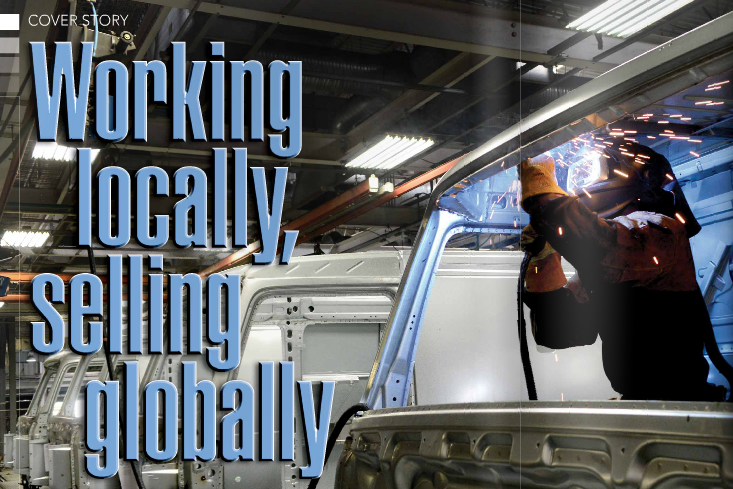
– The cover leader looks at international investment in the Roanoke and New River valleys. Volvo, Korona Candles, Red Sun Farms — why are these companies locating here, and what does it mean for the region?

– I also examined the impact of a new EPA regulation on a Floyd County wood stove dealer.

Read more, either online or in the print edition, which is available free this month on racks in Roanoke & NRV grocery stores.

The changing fortunes of farming, hydroponics & the Virginia Senate (Roanoke Business)

The September 2015 issue of Roanoke Business magazine features three of my stories:

The changing fortunes of farming, the cover feature, which examines southwest Virginia ag in 2015 through the five-year USDA Census of Agriculture and interviews with key players.

“About as high-tech as it gets”: Red Sun Farms may be agriculture’s future under glass, a sidebar that looks at the hydroponic tomato grower’s 18-acre — and growing — operation in Pulaski County.

Power in balance: The region’s races could determine which party controls the Virginia Senate, a round-up of issues and candidates in the three-way races in the 19th and 21st districts, which encompass most of the Roanoke and New River valleys.

Inside the Burger Restaurant Where Hank Williams Uttered His Last Words (Munchies/Vice)

They placed Hank Williams in a wheelchair and hauled him from the Knoxville hotel to his powder-blue Cadillac convertible, where his driver, a college freshman named Charles Carr, waited.

Loaded on booze, morphine, chloral hydrate, and vitamin B12, Williams crawled into the back seat, wrapped a blanket around himself, and laid down. Tasked with ferrying Williams to a New Year’s Day gig in Dayton, Ohio, Carr drove out of Knoxville, Tennessee, and into legend.

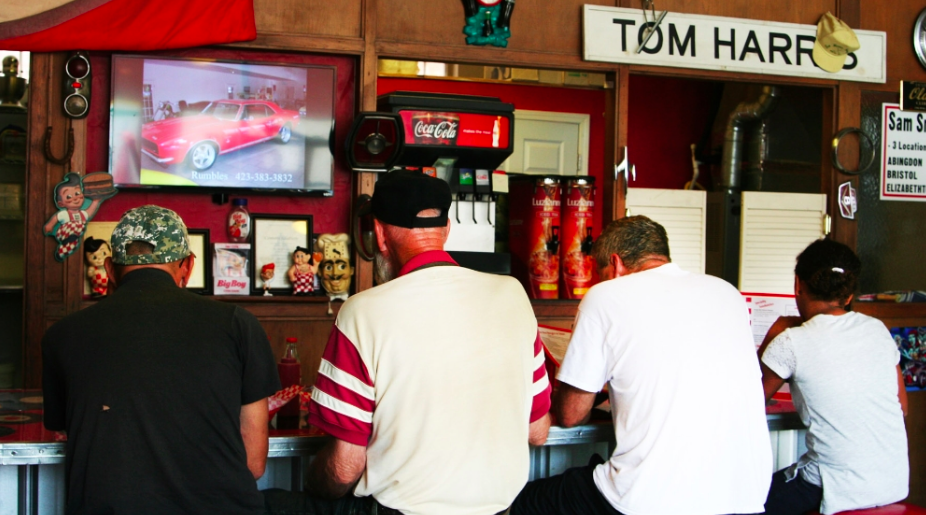
Near midnight, Carr stopped in downtown Bristol, Virginia, to get gas and look for a relief driver. He went to a cab stand and noticed a diner, the Burger Bar, next door. Carr asked Williams if he wanted anything to eat. Williams declined, saying he just wanted to sleep.

Read more about the murky stories surrounding Williams’ last ride and the restaurant that claims to be the site of his last words in my story for Munchies, Vice’s food site.

The loss of two Roanoke journalists in a senseless shooting

Roanoke media is incredibly close-knit. For all the competition, reporters hold friendships across outlets. That friendliness is an outgrowth of long days spent waiting on politicians at events, taking turns asking questions of law enforcement officers in news conferences, and sharing space while covering the best and worst in human behavior.

I left the Roanoke Times before Alison Parker or Adam Ward came to work for WDBJ7, but I had worked with their counterparts in the broadcast field, some of whom were their coworkers at the time of last week’s shootings at Bridgewater Plaza.

I was called in by the Washington Post to help report the story, which put me in the odd position of working alongside old friends and colleagues, who were covering the deaths of two of their own, while I was representing an outside publication.

Both Parker and Ward had reported on the local roller derby leagues with whom I had such close ties. Parker reported on the Star City Roller Girls, donning skates, pads and a derby name, while Ward had shot footage of the NRV Roller Girls for a seperate story.

After what felt like a long day talking on the phone to those who remembered Parker and Ward; speaking to Sherman Lea Jr., who briefly was misidentified on social media as the shooter; and covering a news conference at the Franklin County Sheriff’s Office in Westlake, my name appeared as a contributor to a few different Washington Post stories covering different aspects of the tragedy and its aftermath.

The stories:
Two Roanoke journalists killed on live television by angry former colleague
Vester Lee Flanagan was ‘a man with a lot of anger,’ station manager says
Man who shot Va. TV journalists had troubled tenure at station, records show

Railroad legacy fades (Virginia Business)

When news came in March that Norfolk Southern would close its Roanoke administrative offices, moving 426 jobs to Norfolk and Atlanta, many city residents feared for the city’s economic future.
After all, Norfolk and Western Railway’s decision to build in Roanoke in the 1880s kick-started the “Magic City’s” growth and long served as its leading industry. Yet, the railroad has waned in influence and employment for decades, shrinking a local workforce of more than 5,000 people at its height to 1,200 today. The closure of the administrative offices continues a process that began in 1982 when Norfolk Southern, formed in the merger of Norfolk and Western and Southern railways, moved its headquarters from Roanoke to Norfolk.

Other closures are testing the economic resilience of the Roanoke and New River valleys. Retailer HSN Inc. will close its Roanoke County fulfillment center next year, eliminating 350 jobs. Banking company BB&T Corp. closed its Roanoke call center, and wireless phone service nTelos shuttered its Botetourt County customer support center for a combined loss of nearly 200 jobs. A staff reduction at Allstate Insurance Co.’s Roanoke County customer support center cost another 185 jobs.

Despite the spate of job losses, however, optimism remains. The region no longer relies on one, two or even three industries. Indeed, Moody’s has ranked Roanoke and Richmond as the cities with the most diverse economies in Virginia — an attribute that helps cushion the blow.

Read more in my Roanoke/New River Valley community profile for Virginia Business magazine.

The fight against cancer, campus changes & more (Virginia Tech Magazine summer 2015)

Because cancer takes many forms, each unique to itself, Virginia Tech faculty, students, and alumni who fight the disease find themselves in a wide variety of roles.

In its summer 2015 edition, Virginia Tech Magazine showcases the university’s efforts to fight cancer. Whether through caregiving, research, or fundraising, Hokies infuse their work with the spirit of Ut Prosim (That I May Serve) to battle cancer at all levels.

Read my story on Hokies fighting cancer here.

Navigating the Virginia Tech campus soon will be simpler, following construction projects at the north end of the Drillfield, at the Southgate Drive and U.S. Route 460 intersection, and in the northern section of campus near Prices Fork Road and West Campus Drive. Our maps will help bring you up to date and get you where you want to go.

Read my story on the physical changes coming to the Blacksburg campus here
.

The full issue is available online here.

Going solar: the Solarize movement in Montgomery County (Roanoke Business)

On a recent sunny afternoon, gaggles of people gathered to listen as New River Valley elected officials and renewable energy advocates announced the launch of Solarize Montgomery. It’s an effort to get homeowners to purchase solar panels that expands upon a Solarize Blacksburg effort in 2014.

That pilot “Solarize Blacksburg” program invited solar installers to bid on a group of installations to help lower costs, then offered financing options. Of the 468 people who responded, 92 were from outside Blacksburg, and thus the program’s boundaries.

Solarize Montgomery is targeted at those 92, along with others in Montgomery County interested in going solar. Sign-ups run through July 22.

After filling out an online form at SolarizeMontgomery.org, applicants receive a satellite assessment, basically meaning that installers look at the location and orientation of the site via Google Earth to determine if it might be a good fit. Next, installers visit the site for an in-person assessment. For many homes, it may make more sense to install basic energy conservation measures.

If the site visit shows the home would benefit from solar energy, however, installers submit a proposal and price estimate. If applicants choose to move forward, they’re eligible for a 30 percent federal tax credit and long-term financing assistance.

Of the 468 people who applied through Solarize Blacksburg, 168 followed through far enough to get an on-site assessment and proposal from an installer. Fifty-six homeowners actually pulled the trigger – a fraction of the initial response, but “a really high conversion rate for something this complex,” says Blacksburg Sustainability Manager Carol Davis.

Read more in my story on western Virginia’s Solarize movement in Roanoke Business magazine.

Dylann Roof’s Rebel Yell (Politico Magazine)

It’s been 150 years since the Civil War ended, but the Confederacy never really went away. It just got reabsorbed, more or less intact, back into the United States. And today the fight is still going on. Indeed, in some ways—ironically thanks to social media—the nation is more segregated and disunited than ever.

The last battle of the Civil War ended at Palmito Ranch, Texas, on May 13, 1865, and yet many more battles have been fought since then. Reconstruction was marked by racial terrorism, the emergence of the Ku Klux Klan and the return of former Confederates to government leadership in the South, where they set about writing laws to disenfranchise blacks and keep them a few pegs down the societal ladder, if not quite in the chains they wore as slaves. Even when Jim Crow segregation laws were eliminated by the U.S. Supreme Court and the Civil Rights movement in the past half century, the spirit of the Confederacy endured in the hearts and homes of many in the South.

Read more about the persistence of the Confederacy and what how it relates to last week’s Charleston shooting in my story at Politico Magazine.

Dr. Harry Wilson: Gun control debate likely off the table (Roanoke College)

The 2016 presidential election is more than a year away, but aspiring candidates already have started the debate on everything from taxes and the economy to immigration and foreign policy.

In next year’s pivotal race for the White House, every issue is in play—with the likely exception of gun control. Unless there’s a mass shooting that garners national attention between now and Election Day, says Harry Wilson, a nationally renowned expert on firearms politics and policy, the question of gun control likely will remain off the table.

In his new book, “The Triumph of the Gun-Rights Argument: Why the Gun Control Debate Is Over,” Wilson, Roanoke College professor of public affairs and director of the Institute for Policy and Opinion Research (IPOR), explains why the issue essentially has been decided for at least a generation.

Read more at the Roanoke College news archive.